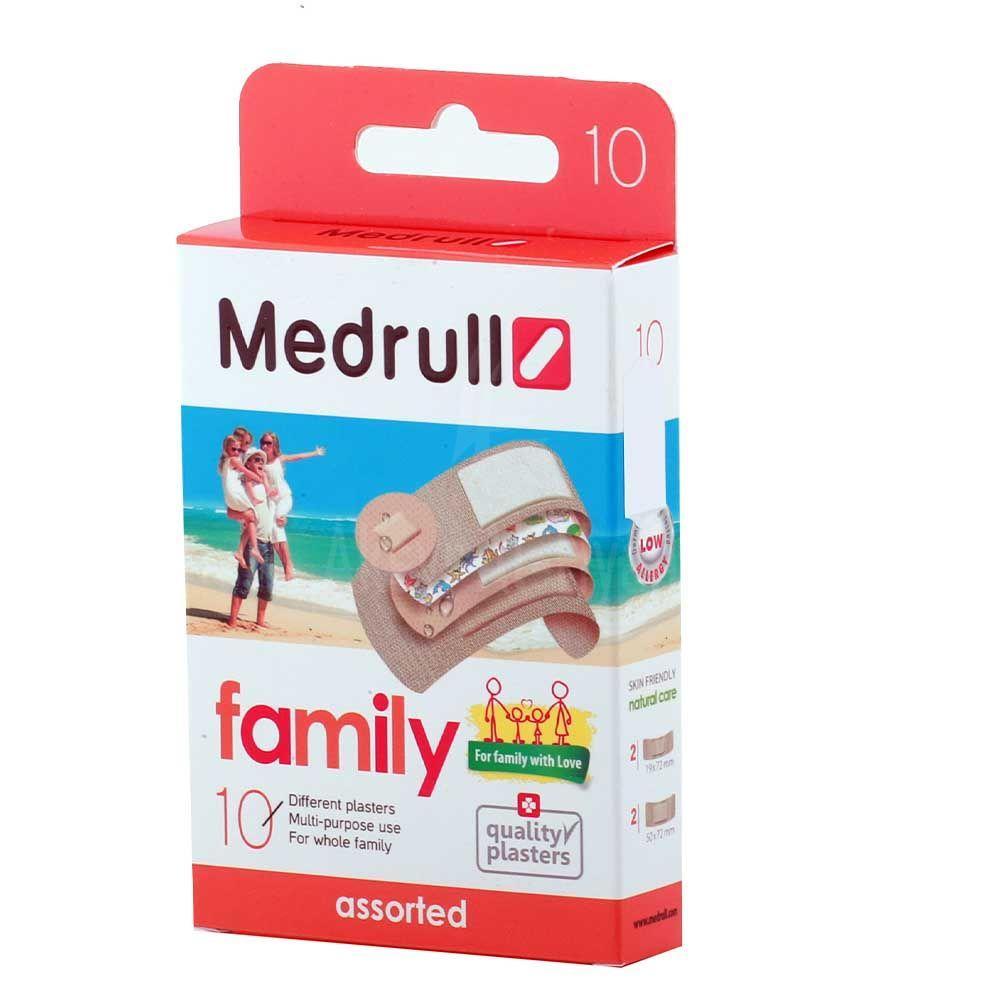
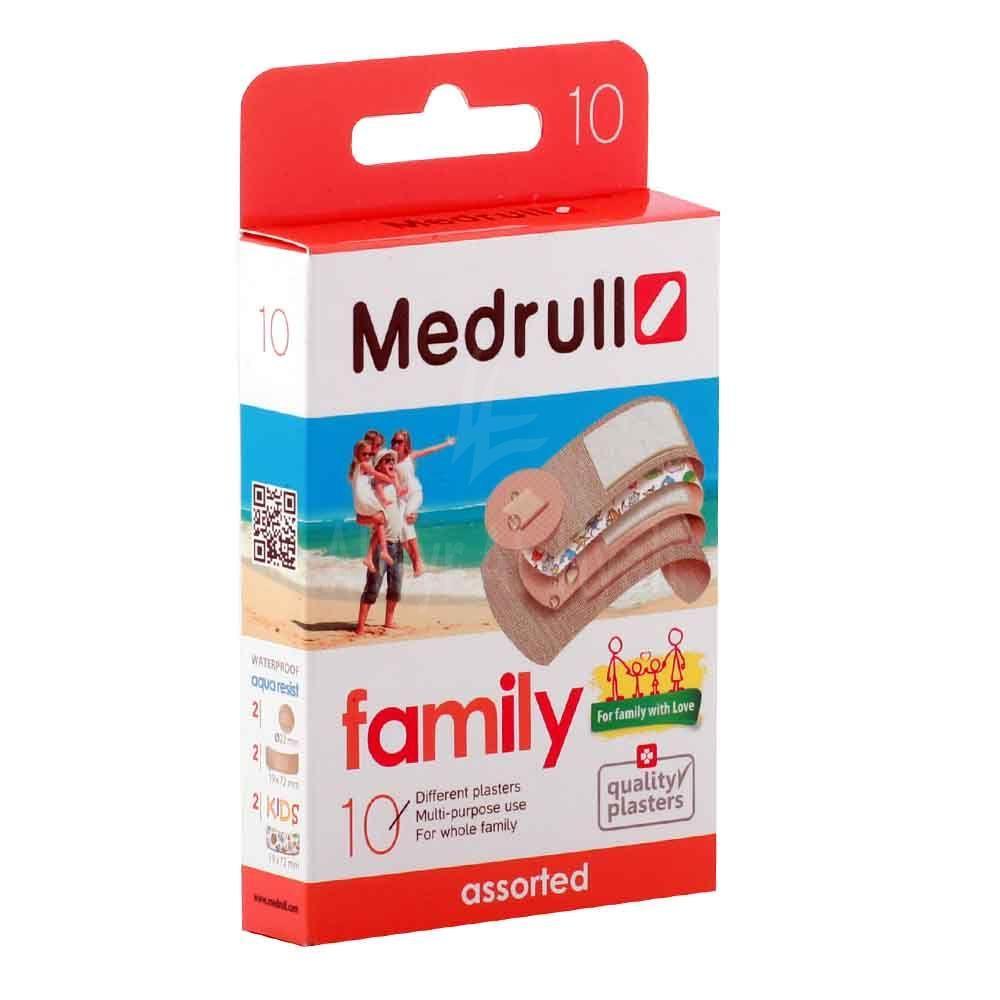
MEDRULL PLASTER FAMILY ASST 10'S
- QR 10.00
Not available

Variety of plasters for versatile applications suitable for every member of the family
Wash and Clean the Wound: Clean the wound gently with clean water and mild soap (if needed). Avoid using harsh chemicals like alcohol or hydrogen peroxide directly on the wound, as they can irritate the skin. Pat the area dry with a clean towel or gauze pad. It’s important to make sure the area is completely dry before applying the plaster to ensure it sticks well. Select the Right Size Plaster: Choose a plaster size from the assorted pack that matches the size of the wound. Small plasters are ideal for cuts or scrapes on fingers or small body areas. Medium to large plasters work best for larger areas, such as the knees, elbows, or the back of the hand. Peel Off the Protective Liner: Carefully peel off the backing paper or plastic liner from the adhesive side of the plaster. This reveals the sticky side that will attach to your skin. Apply the Plaster: Place the absorbent pad (the center part of the plaster) directly over the wound. Smooth the edges of the plaster around the wound to ensure that it sticks securely and seals the wound off from dirt, bacteria, and moisture. Press down gently but firmly to ensure good adhesion. Make Sure It’s Comfortable: Ensure that the plaster isn’t too tight around the wound. The plaster should comfortably cover the injury without restricting blood flow or causing discomfort. If the plaster feels too tight, remove it and try a different size. Check the Plaster Regularly: Check the plaster periodically to ensure it is still in place and dry. If the plaster gets wet or dirty, replace it with a fresh one to maintain a clean and protected environment for the wound to heal. Also, monitor the wound for signs of infection, such as redness, swelling, or pus. If these occur, seek medical advice. Remove the Plaster: When the wound has healed or the plaster needs to be changed (e.g., if it’s wet or dirty), gently peel off the plaster from the skin. Start from one edge and peel it slowly to avoid any discomfort. If the plaster is stuck to the wound (for example, due to exudate), dampen it slightly with warm water to loosen the adhesive, then remove it gently. Dispose of the Plaster: After removing the plaster, dispose of it in the trash (do not flush it down the toilet). Make sure to discard it properly.
Product Name: Medrull Family Plaster Assorted 10's Quantity: 10 plasters per pack (assorted sizes) Plaster Sizes: Typically includes small, medium, and large sizes, making them versatile for different wounds. Material: The plasters are typically made from fabric or non-woven material with a breathable and elastic design for comfort. The adhesive is medical-grade, skin-friendly, and strong enough to stay in place. Use: Ideal for minor wounds like cuts, abrasions, and blisters. Can be used on hands, feet, arms, legs, and other parts of the body. Packaging: Comes in a compact, portable pack that is easy to store in first aid kits, bags, or at home. Water-Resistant: These plasters often have some level of water resistance, which means they stay on even when you wash your hands or get wet (but may not be fully waterproof). Latex-Free: Many Medrull plasters are latex-free, making them suitable for people with latex sensitivities or allergies.
For External Use Only: Only use on superficial wounds such as cuts, abrasions, and scrapes. If the wound is deep or more serious, consult a healthcare professional. Change Regularly: Replace the plaster if it gets wet, dirty, or after a few hours to ensure that the wound remains clean and the plaster stays effective. Avoid Over-tightening: Ensure that the plaster is applied gently. It should cover the wound without being overly tight or restrictive, to allow for proper healing. Keep Out of Reach of Children: Keep plasters away from children who may try to eat or swallow them.
Reliable Protection: The adhesive backing ensures the plaster stays in place to keep the wound clean and dry, preventing infection from external dirt and bacteria. Variety of Sizes: The assorted sizes provide flexibility for treating different types of wounds, from small cuts to larger abrasions. This makes it easier to find the right plaster for the right injury. Breathable Material: The plaster is made from a breathable fabric that allows air to circulate around the wound, helping it heal faster and more efficiently. Comfortable and Flexible: The plasters are designed to be flexible and comfortable, even when placed on areas that move frequently, such as joints, fingers, or knees. Water-Resistant: Many versions of Medrull plasters are water-resistant, allowing the wearer to continue everyday activities like washing hands or doing light chores without worrying about the plaster coming off. Gentle Adhesion: The adhesive is designed to stick well but remove gently without causing discomfort or leaving sticky residues, making it ideal for children and sensitive skin.
🧒 Child Safety
Adhesive: Acrylic-based or Rubber-based Adhesive: Used for strong but gentle adhesion. It holds the plaster in place while ensuring it doesn't irritate the skin during removal. These adhesives are also hypoallergenic, making them suitable for sensitive skin. Non-woven Fabric or Cotton (for the outer layer): Non-woven fabric: The outer material of the plaster is often made of soft, breathable, and flexible non-woven fabric (or sometimes cotton), ensuring comfort while allowing air circulation to promote faster healing. It is designed to stretch and conform to body contours, making it suitable for use on joints, fingers, and other areas that move. Absorbent Pad (Cotton or Gauze): The central part of the plaster contains an absorbent pad or gauze that absorbs any wound exudate (e.g., blood or fluids from the wound). The pad is sterile to minimize the risk of infection and help keep the wound clean. Polyethylene Film (optional in some versions): Some plasters may have a thin polyethylene film layer to provide extra water resistance and protect the wound from external moisture or dirt. Wound Contact Layer: A non-stick contact layer (such as polyethylene or mesh), ensuring that the plaster doesn't stick to the wound itself, which helps prevent pain during removal and avoids disturbing the healing process. Backing Material: The backing material (which is typically the film or fabric on the reverse side of the plaster) is designed to be flexible and easy to remove when applying the plaster. It may be coated with a peel-off paper or plastic liner. Sterilizing Agent: While the plaster itself is sterile, the absorbent pad may be treated with a mild sterilizing agent (such as ethanol or hydrogen peroxide) to maintain cleanliness before use. Water-Resistant Coating (optional): Some Medrull plasters are treated with a water-resistant coating, making them ideal for use in situations where the plaster might be exposed to light moisture, such as washing hands or light rain. Preservatives: Preservatives (if used) are typically included to maintain the shelf life of the plasters and prevent bacterial growth. These may include substances like phenoxyethanol or benzalkonium chloride, though many plasters are designed to be preservative-free for sensitive skin.
Know Your Product
Medrull Family Plasters are a versatile selection of PE (waterproof) and textile (suitable for extra sensitive skin) plasters designed for the entire family. These plasters are not only dirt repellent but also securely adhesive, making them perfect for various uses.Medrull Family Plaster Assorted 10's is a pack of versatile adhesive plasters designed for treating minor cuts, scrapes, and abrasions. These plasters are a great addition to any first aid kit, offering reliable protection and comfort for the whole family.
Send Alternative Request
You Might Also Like
Ratings & Review
Free Home Delivery
We are committed to providing a hassle-free shopping experience for you. Enjoy free home delivery on orders.
Instant Return Policy
Our Instant Return Policy allows you to return the product with full refund or exchange.
Quick Support System
We offer fast and responsive customer support to assist you with any queries or issues you might have.
Secure Payment Way
Shop with confidence using our Secure Payment Gateway. We offer multiple payment options.
100% Secured Payments with SSL Security

Copyright © 2025 Aksyr Al Hyah Pharmacy. All Rights Reserved.